Waldon becomes exclusive service partner of the Wellbeing Works chair at Antwerp Management School
Most organisations no longer need to be convinced of the importance of wellbeing at work. The real challenge today lies elsewhere: how do you develop a wellbeing policy that genuinely contributes to employees’ wellbeing? And how do you translate good intentions into a lasting impact?
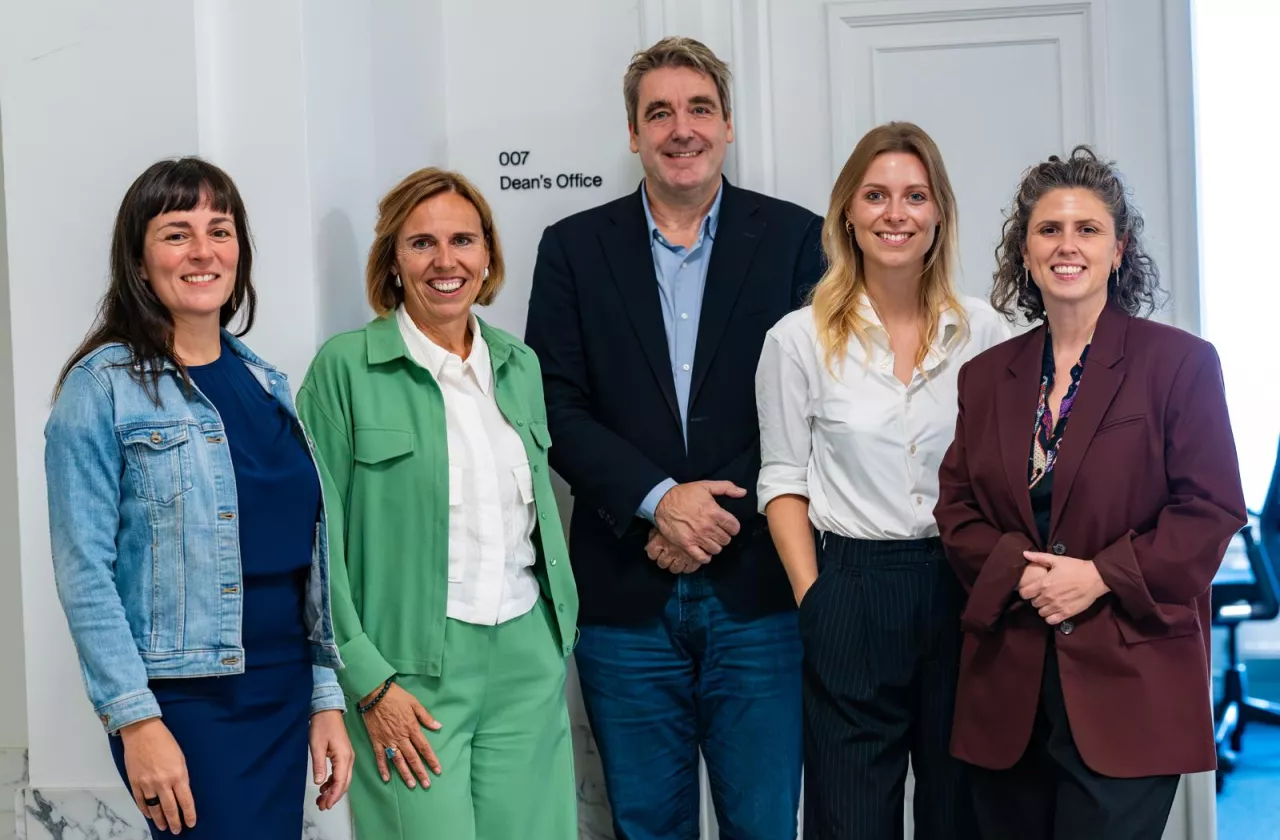
These questions are central to the Wellbeing Works Chair at Antwerp Management School. Following a successful initial three-year research period, Waldon is proud to join as an official research partner for the second phase of this ambitious research programme. Together with Antwerp Management School, Elia, Pidpa, the City of Antwerp and the Province of Antwerp, we are investigating how wellbeing policies can be successfully implemented and sustainably embedded in the day-to-day operations of organisations.
Alongside being a research partner, Waldon is also the exclusive service provider for the Wellbeing Works Chair, which means we are the only organisation able to incorporate the insights from the research directly into the further development of our methodologies, tools and services, ensuring that our approach is continually informed by the latest scientific insights.
An evidence-based approach has been in Waldon’s DNA from day one. That makes this collaboration a logical choice for us.
About the Wellbeing Works chair
The Wellbeing Works chair is based on a simple premise: organisations should not base important decisions regarding wellbeing in the workplace on assumptions, trends or (merely) gut feeling.
That is why the research programme brings together researchers and practitioners to develop evidence-based knowledge that helps organisations build stronger and more effective wellbeing policies. Scientific accuracy, long-term research and practical testing within real organisational contexts form the basis for this.
“The ultimate aim is not only to gain a better understanding of wellbeing, but also to develop practical methodologies, frameworks and tools that enable organisations to achieve a sustainable positive impact.”
What makes this chair so valuable is the close collaboration between the academic world and the participating organisations. Partners actively contribute to the research agenda, challenge existing insights and ensure that the research findings remain relevant to the challenges organisations face today.
The ultimate aim is not only to gain a better understanding of wellbeing, but also to develop practical methodologies, frameworks and tools that enable organisations to achieve a sustainable positive impact.

The research in a nutshell
Organisations are investing increasingly in the wellbeing of their staff, for example through wellbeing surveys, programmes, training courses and awareness campaigns. However, these efforts do not always yield the desired results.
A wellbeing policy may be well-founded, but it only creates value when it is consistently applied and employees experience its effects. Isolated initiatives are therefore not enough. Organisations need a coherent approach that takes into account both the needs of employees and the broader organisational context.
“The first phase of the research helped organisations understand what they can do to support wellbeing at work. The next step is to investigate how they can successfully put that policy into practice.”
During the first three-year research cycle within the Wellbeing Works Chair, Antwerp Management School developed a scientifically grounded method enabling organisations to develop a bespoke wellbeing policy. This approach helps them to analyse their needs in a structured manner and to translate the resulting insights into policy and concrete actions.
The first research phase therefore primarily helped organisations understand what they can do to support wellbeing at work. The next step is to investigate how they can successfully put that policy into practice.
Many organisations today have a wellbeing policy and invest in various initiatives. Yet they do not always see the impact they had hoped for.
One possible explanation lies in the gap between:
- what senior management and HR aim to achieve;
- what managers and teams put into practice;
- and what employees ultimately experience.
Within the research, this is described as the intention-implementation-perception gap: the difference between what an organisation aims to achieve with its wellbeing policy, what happens in day-to-day practice, and how employees experience that policy.
The second research cycle therefore focuses on the question of how organisations can narrow that gap. What conditions are needed to enable change? Why do some wellbeing initiatives have an impact whilst others have hardly any? And how can wellbeing become part of day-to-day operations, rather than an additional initiative that has to compete with other priorities?
The research deliberately adopts an open-minded approach. Rather than putting forward pre-determined solutions, the researchers are working with the participating organisations to investigate which factors make wellbeing policies successful and sustainable in practice.
What the research means for Waldon
For Waldon, participating in Wellbeing Works means more than simply supporting scientific research. As exclusive service partner, we are given the opportunity to directly translate the insights developed within the chair into our own methodologies, tools and services.
This role aligns seamlessly with our vision of wellbeing. Since our foundation, we have believed that organisations make the greatest impact when scientific insights and practical experience reinforce one another. Through our involvement in the research, we not only stay aware of the latest developments within the field, but we can also actively apply that knowledge to further refine and underpin our offering.
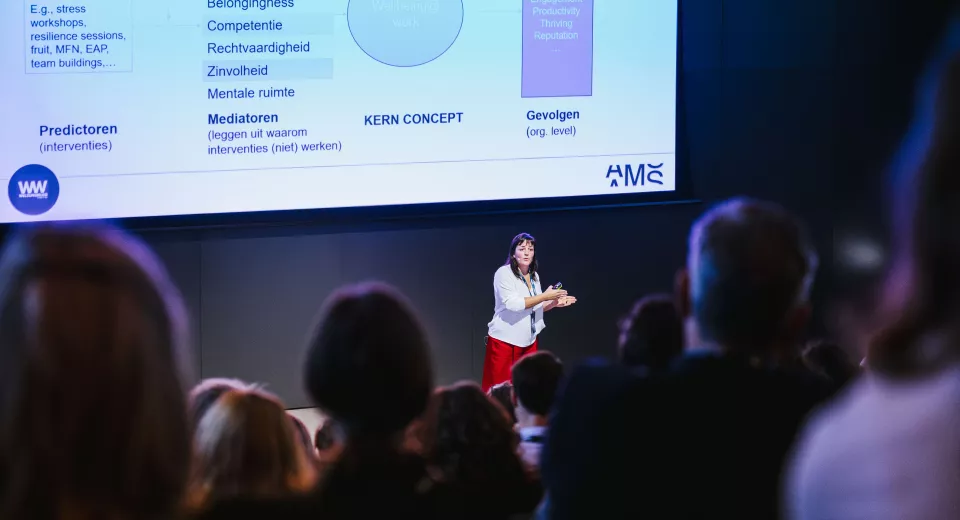
The collaboration thus builds on our existing relationship with Professor Kathleen Vangronsvelt, who leads the research group. Back in 2025, she shared her expertise at Waldon’s annual event on prevention and long-term sick leave.
Looking to the future
The next three years are unlikely to yield a simple formula for success in workplace wellbeing. Organisations are complex, and sustainable change rarely follows a straight path.
What this research programme does promise, however, is a deeper insight into how organisations can turn good intentions into meaningful and lasting impact.
Through our participation in Wellbeing Works, we are reinforcing our commitment to linking scientific insights with practical experience. Together with Antwerp Management School and the other partners, we look forward to contributing to the knowledge, insights and innovations that will help shape the future of wellbeing at work.

