How to tackle long-term absenteeism with a focus on prevention? The most important insights from our event

We are heading towards 600,000 long-term sick employees. One in three workers struggles with physical or psychological complaints, and one in four faces an increased risk of burnout. The government spends over two billion euros annually on mental healthcare. Yet, in many organisations, wellbeing policies remain fragmented, reactive, and underfunded. More and more companies recognise that wellbeing is an investment that pays off, but the question remains: how do we break through the blind spots? That was the central theme of our annual workplace wellbeing event. Here’s what we learned.
Some highlights from our event
Invest in wellbeing through structural change
Prof. Dr Kathleen Vangronsvelt of Antwerp Management School revealed why well-intentioned wellbeing initiatives often fall short. “The evidence that investing in wellbeing pays off is clear,” she explained. The Queensland Government (2017) calculated that every dollar spent on a mentally healthy workplace yields an average return of 2.30 dollars. Similarly, the UK’s Stevenson & Farmer Review (2017) found a return of 4.20 pounds for every pound invested. “The question is no longer why we should invest in wellbeing, but how to organise it successfully.”

Research shows that only 30% of burnout causes lie with the individual; the remaining 70% stem from how work is organised. Yet many organisations still focus on individual fixes - fruit baskets, gym memberships, mindfulness sessions - while structural causes remain untouched. True wellbeing requires attention to six fundamental employee needs: autonomy, connection, competence, mental space, purpose, and fairness.
Wellbeing flourishes only when organisations structurally support these needs through interventions at four levels: Individual, Group, Leader, and Organisation (the IGLO model, Nielsen 2018). Wellbeing must be woven into decision-making, leadership, and collaboration to become truly sustainable. Prof. Vangronsvelt developed the evidence-based Wellbeing Works model to design, measure, and improve wellbeing interventions. Its effectiveness will continue to be tested in the coming years.
“Workplace wellbeing is not an individual problem we can solve with isolated initiatives. It is a collective responsibility embedded in how we work.”
What does the future of workplace wellbeing look like?
A panel featuring Daan Aeyels (Voka), Cédric Velghe (The Vigor Unit), and Maurits Vanackere (Federgon) explored the current state and future of workplace wellbeing.

Government initiatives such as the TRIO platform, the fit note, and the updated Codex on Workplace Wellbeing show ambition around prevention and reintegration. Yet policy remains overly medical and insufficiently focused on creating “work that doesn’t make people sick.” Belgium has twice as many long-term sick employees as neighbouring countries, even though work can often be part of the solution.
A more integrated approach - emphasising training, guidance, and career transitions - is urgently needed. Current financial incentives fall short, as all three panellists agreed. The solidarity contribution penalises absence without considering its cause or reintegration efforts, offering little motivation for sustainable wellbeing policies. Incentives for successful reintegration and recovery are essential, while cuts to preventive measures such as workability and career checks undermine progress.
“We need a debate on the new role of occupational health services and the effective use of scientifically proven prevention methods.”
HR departments play a key role in embedding prevention sustainably within organisations, from physical and mental wellbeing to personal safety, inclusion, and financial health. Continuous innovation is crucial.
Broader societal factors also influence wellbeing and employment policies. Cédric Velghe highlighted childcare availability: “Research shows that better childcare can increase labour participation among young parents, up to 30% of young women would work more or take a new job. Yet resistance to employer-provided childcare remains strong.”
Another challenge: 42% of Gen Z professionals do not want to become managers, and 74% prioritise autonomy and personal development over team leadership. Organisations must rethink how to make leadership roles attractive and future-proof.
The debate also revealed that job adaptability remains limited in many sectors. In highly regulated fields like healthcare, rigid structures and rules hinder flexibility. Meanwhile, a narrow focus on efficiency, digitalisation, and automation can make jobs less appealing and contribute to absenteeism. Digitalisation itself is not the problem, the real issue lies in rigid pay systems and organisational models that leave little room for autonomy and growth.
“Reducing the waste of human potential will become a key benchmark for sustainable business.”
As a closing thought, the panel agreed: “There is a growing need for transparency on the return on investment of wellbeing initiatives. Employers must better assess which investments truly pay off, supported by a more open and competitive market for prevention services. Prevention will become the norm: companies will need to consider employee wellbeing when designing processes, technologies, and organisational changes and actively include freelancers and temporary workers in that policy.”
Ready to put employee wellbeing on the agenda as a strategic tool?

Fluvius wellbeing policy: from data to buy-in
As a Flemish grid operator with three distinct target groups - office staff, technical teams, and managers - Fluvius partnered with Waldon to create Fluvius Health Partner, an integrated wellbeing programme focused on sleep, nutrition, and exercise. The foundation was data-driven, explain Vera Peetermans (Fluvius) and Kathleen Van Maele (Waldon): “Our absenteeism rate of 5.86%, combined with insights from wellbeing scans and cholesterol checks, clearly showed where preventive gains could be made.”

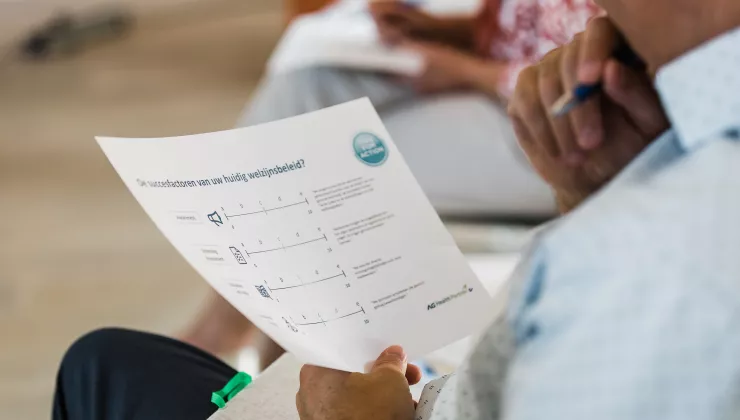
A qualitative wellbeing survey identified success factors: clear programmes, innovative communication, integration into the workday, engaged leaders, and an inclusive approach. Based on this, a wellbeing policy was developed using Waldon’s Measure–Plan–Act methodology, inspired by the Glasses Model. This model translates wellbeing drivers - from physical health to connection and mental resilience - into a structured, strategic policy.
At the heart of Fluvius Health Partner is a network of ambassadors who bring the policy to life. They ensure activation, coaching, and visibility, literally bringing wellbeing to the people. Activities include Vitachecks, Power Breaks, step challenges, cooking workshops, and cardio scans, tailored to the three target groups. Communication spans intranet, a magazine, app, and events under the banner “Your Energy Starts at Fluvius.”
Impact is measured at two levels:
- short term: participation, engagement, and reach
- long term: behavioural change, culture, and absenteeism.
Behind the scenes are ten foundations that make the policy successful. Fluvius measures what matters, plans strategically, tailors actions to each group, and works at individual, team, and organisational levels. Leaders are engaged first to actively support the approach, while ambassadors connect the dots across the organisation. The company considers work context and flexibility. Thanks to a hybrid approach, strong communication, and continuous evaluation, the programme evolves constantly. Wellbeing at Fluvius is not a standalone initiative, it is embedded in the company’s values and culture.
Building resilience by design
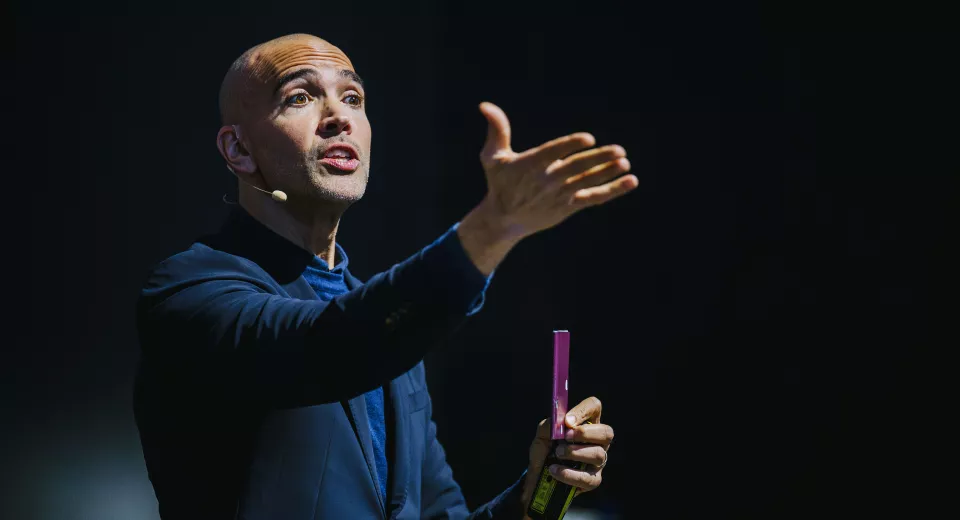
The event concluded with an inspiring story from Joseph Oubelkas, who learned during five years of wrongful imprisonment that your attitude is the one thing no one can take away. His testimony underscored that resilience within organisations does not happen by chance, it is the result of deliberate policies that help people cope with pressure, change, and adversity.